
Shaping Stronger Boards
A research project led by Laura Hennighausen, Director of Strategic Philanthropy
We know that nonprofit boards take many forms, and their impact can vary from organization to organization. Because of this, Purpose Possible set out to better understand how nonprofit boards function today and where there is room for improvement. We invited both board members and executive directors to share their experiences, challenges, and ideas through two surveys. The results of those surveys offer a candid look at how boards contribute to organizational success, expectations versus realities, and what support is needed.
Below is a summary of what we learned from the respones.
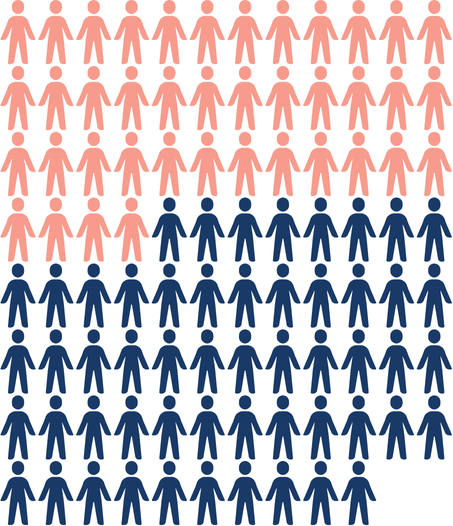
Survey Responders
53% Executive Directors
47% Board Members
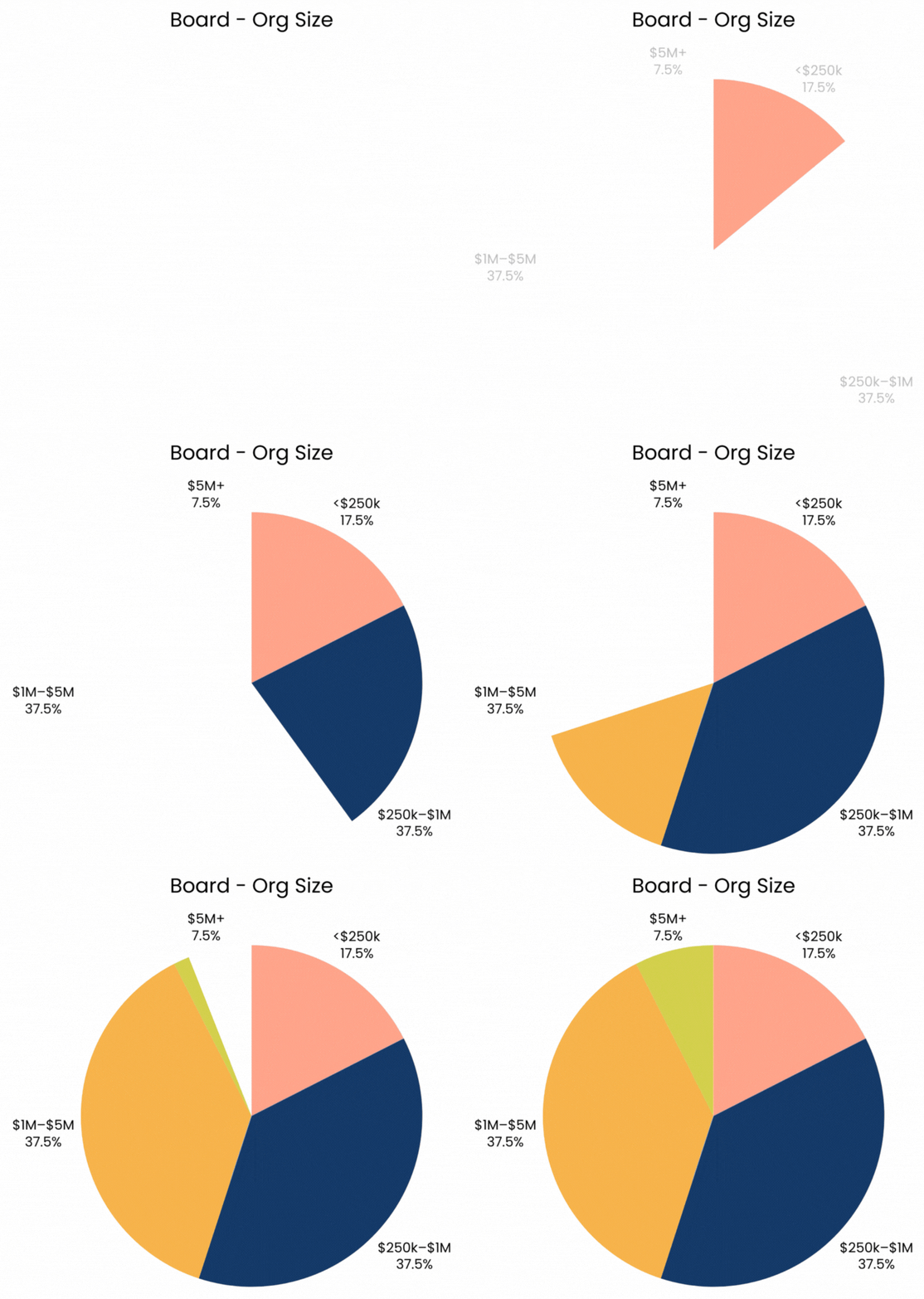
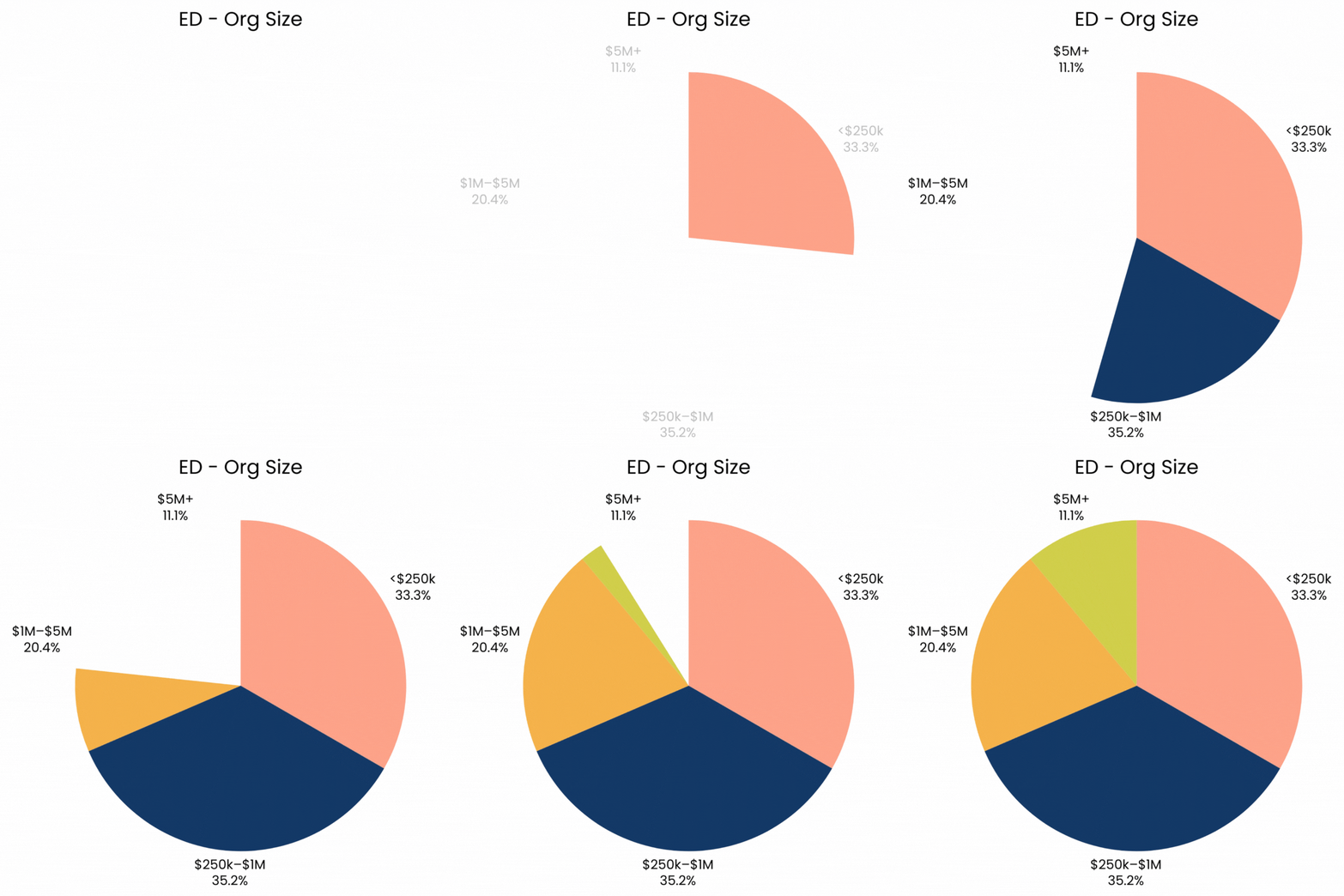
70% of responder organizations were located in Georgia
30% in IL, DC, AL, NC, NY, FL, TN, IN, MI, MD
BOARD MEMBER RESPONSES
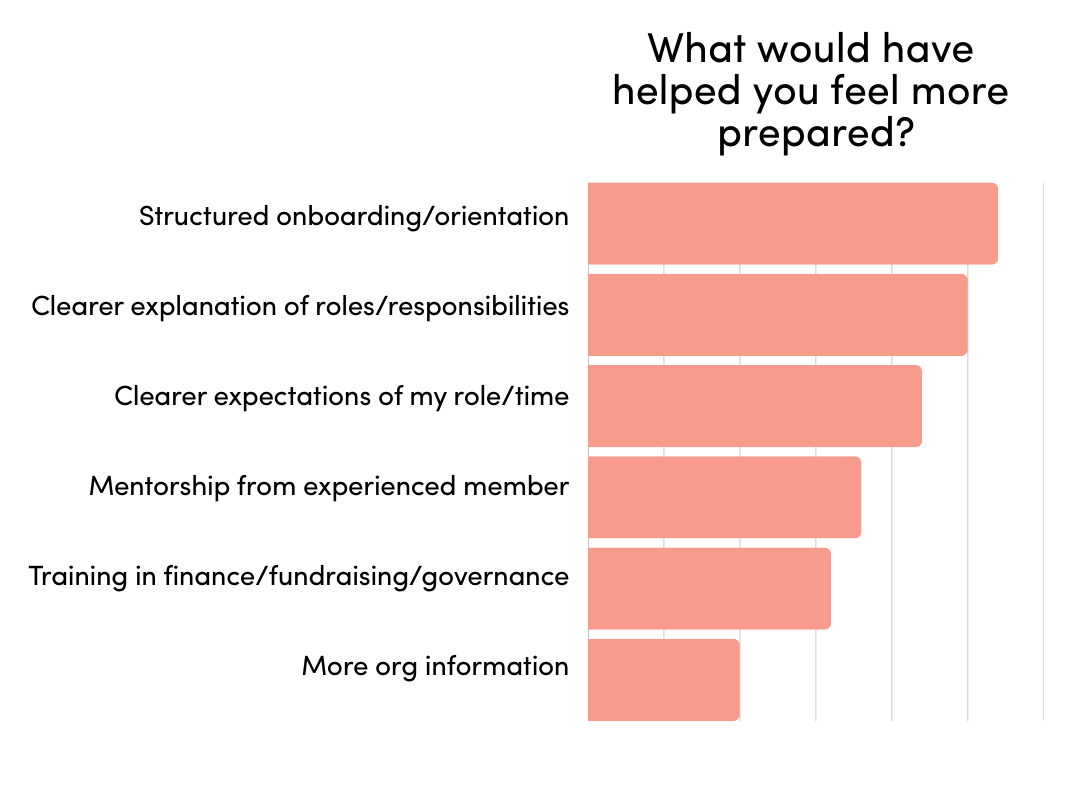
Onboarding, Clarity, & Expectations
Most board members felt reasonably clear in their roles, but expectations lag slightly behind general mission/role clarity.
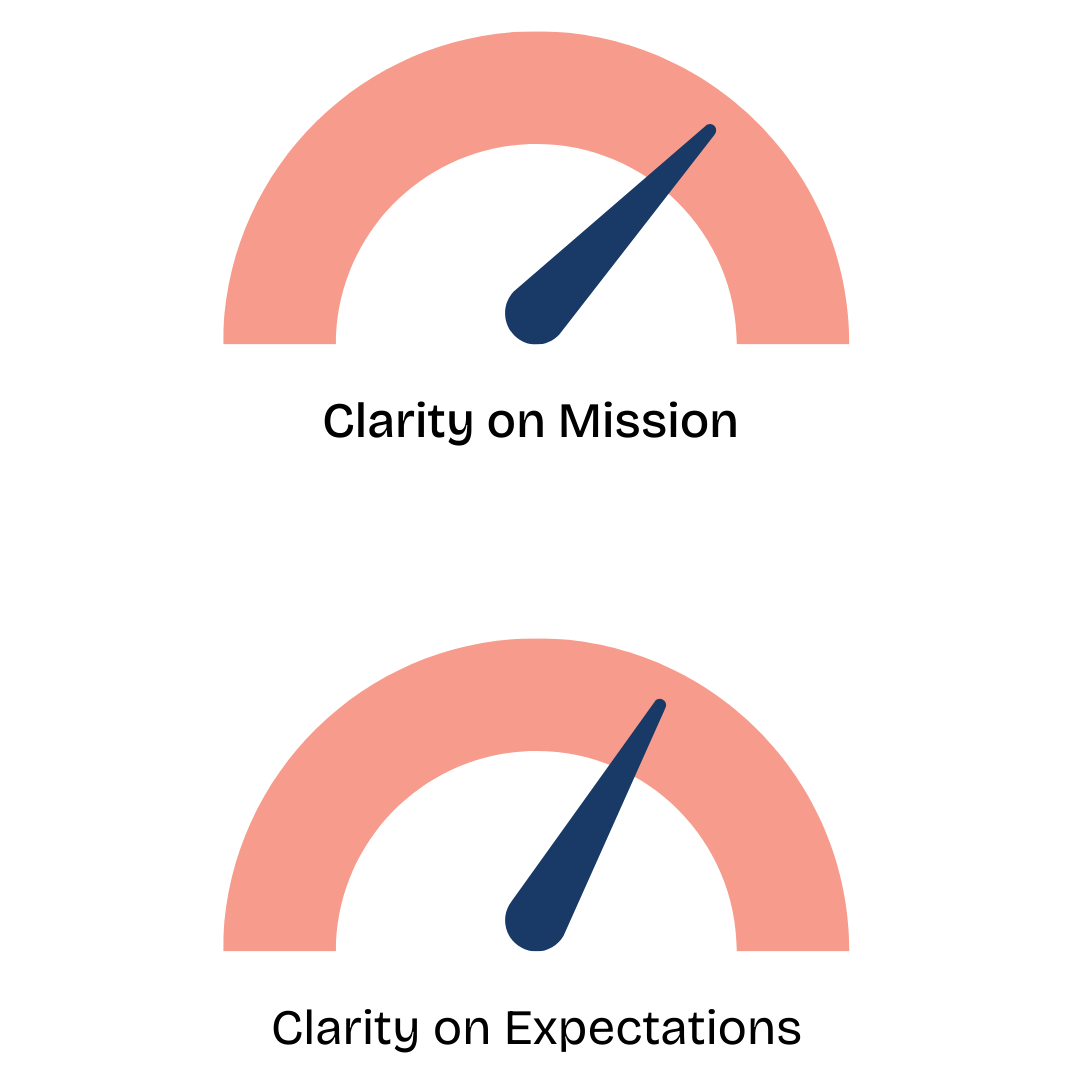
Board members believe they are contributing meaningfully.
Board members stated the most rewarding part of serving include:
Seeing the organization grow or succeed
Contributing to a cause they care about
Having a voice in important decisions
Working with other committed people
Barriers & Challenges
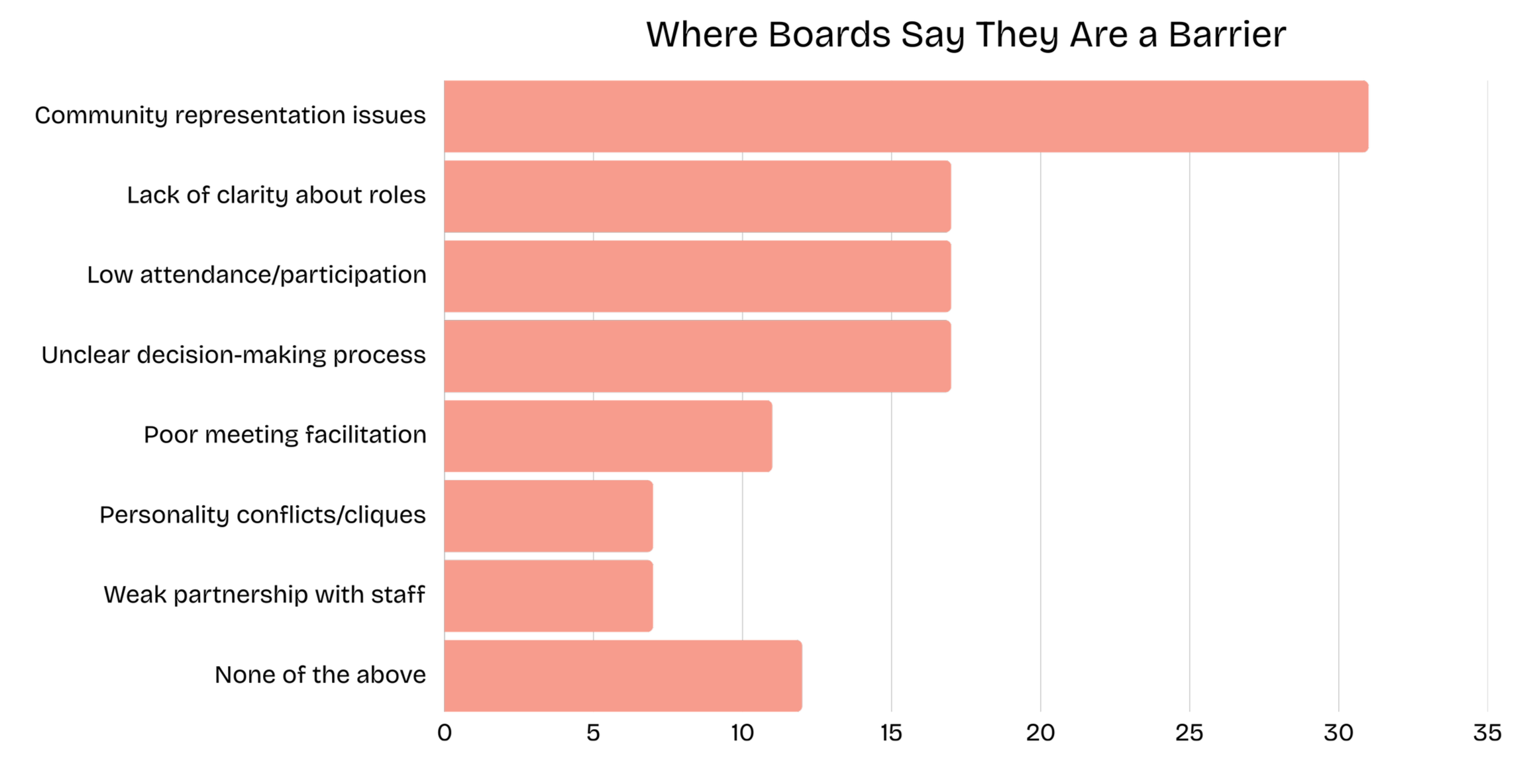
Board members themselves see community representation as the #1 weak spot.
They also experience the same structural issues EDs mention: roles, participation, process, facilitation.
Fundraising
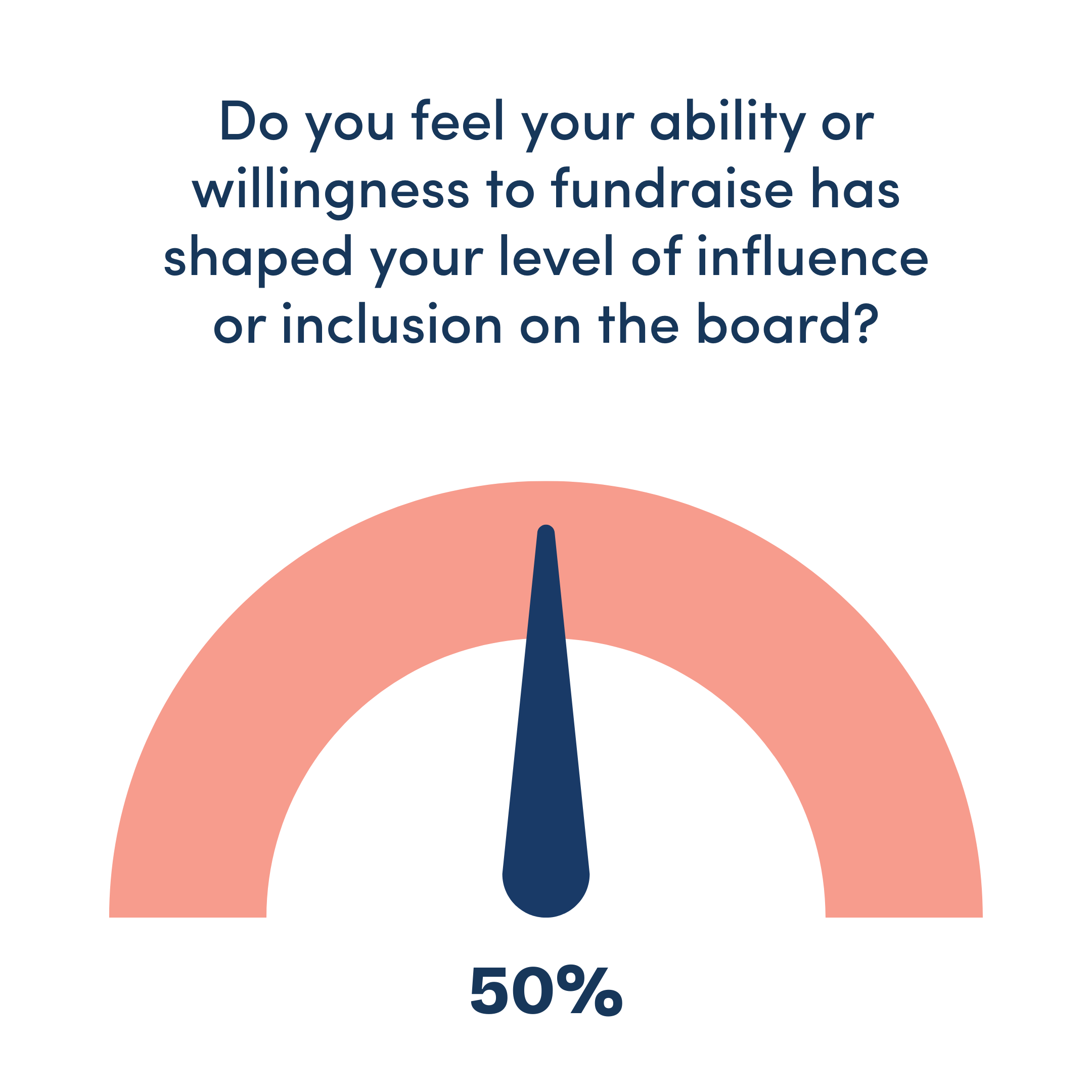
Fundraising Shapes Influence — But Also Causes Discomfort
Board members want fundraising to be one part of a broader toolkit, not the only currency of influence.
Fundraising expectations impact power dynamics
Board members contribute far more than treasure: time, talent, ties
EDs worry fundraising expectations deter community-rooted members
Non-fundraising contributions boards see as equally or more valuable:
Time – attending meetings, committee work, hands-on volunteering
Talent – expertise, professional skills, governance/finance/fundraising knowledge
Ties – connections, introductions, relationships in community or sector



EXECUTIVE DIRECTOR RESPONSES
How EDs Rate Board Performance
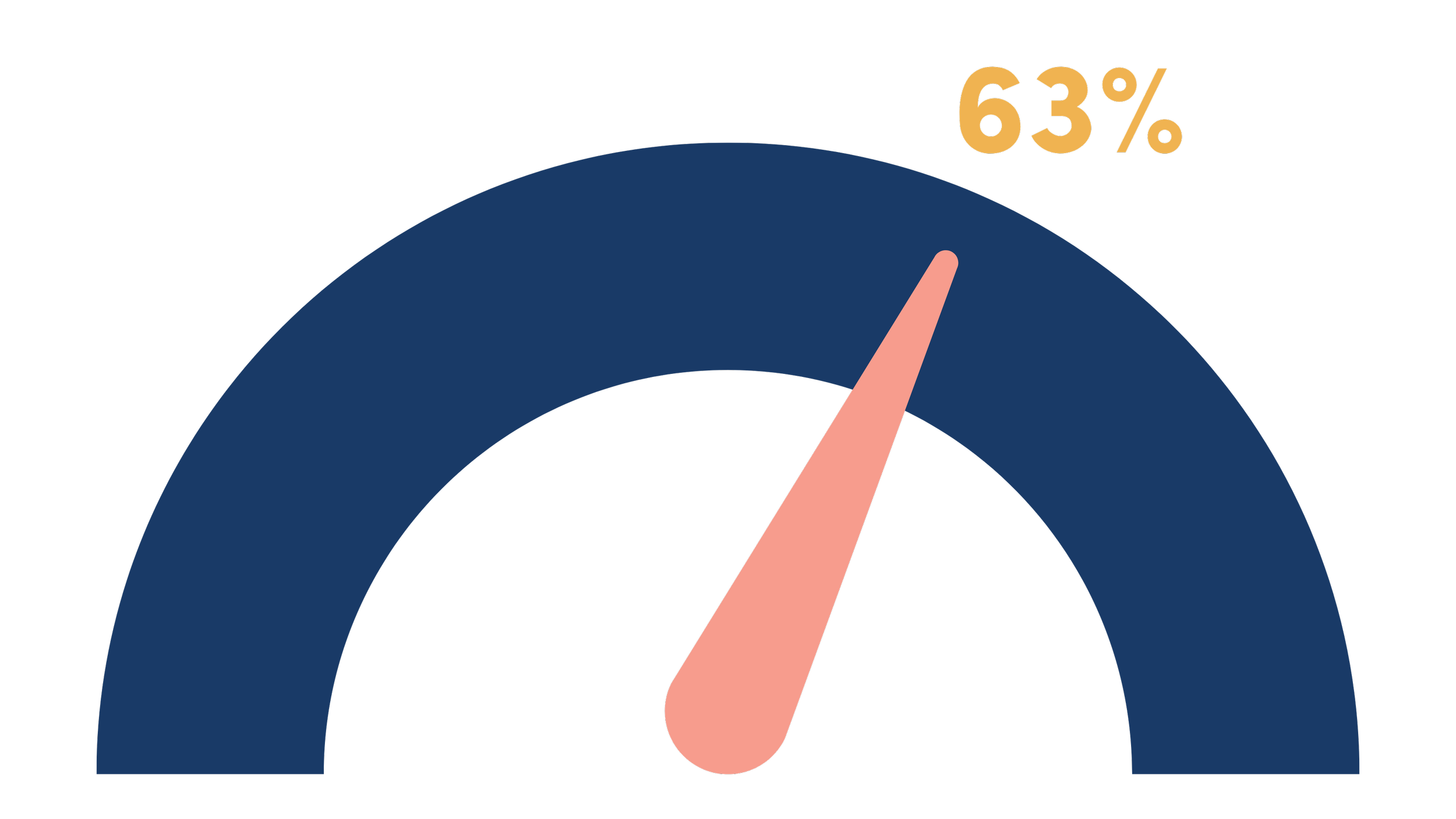
Executive directors report mixed experiences with board effectiveness, with roughly four in ten rating their boards as low-performing and a similar share rating them highly successful. This highlights both persistent challenges and meaningful opportunities for improvement.
What one change would make boards more effective?”
Response themes:
Smaller, more committed boards (“keep headcount low,” fewer rubber-stampers)
Mandatory training (how to read NPO financials, how to be a board member)
Greater emphasis on time & hands-on engagement, not just prestige
Better facilitation and openness to ideas from volunteers
Less formal, more action-oriented governance (not endless proceduralism)
Clearer expectations: “only have board members who consider their volunteer work as important as their job”
ED Perspective on Board Effectiveness
(0–100 scale)


Organizations without board committees report significantly lower board effectiveness than those with committee structures in place. While committees alone do not guarantee success, some level of structure appears essential.
Executive directors were clear: boards work better when expectations are clear, people are prepared, and everyone understands how their role supports the mission. Training, accountability, and openness to change surfaced as recurring themes.


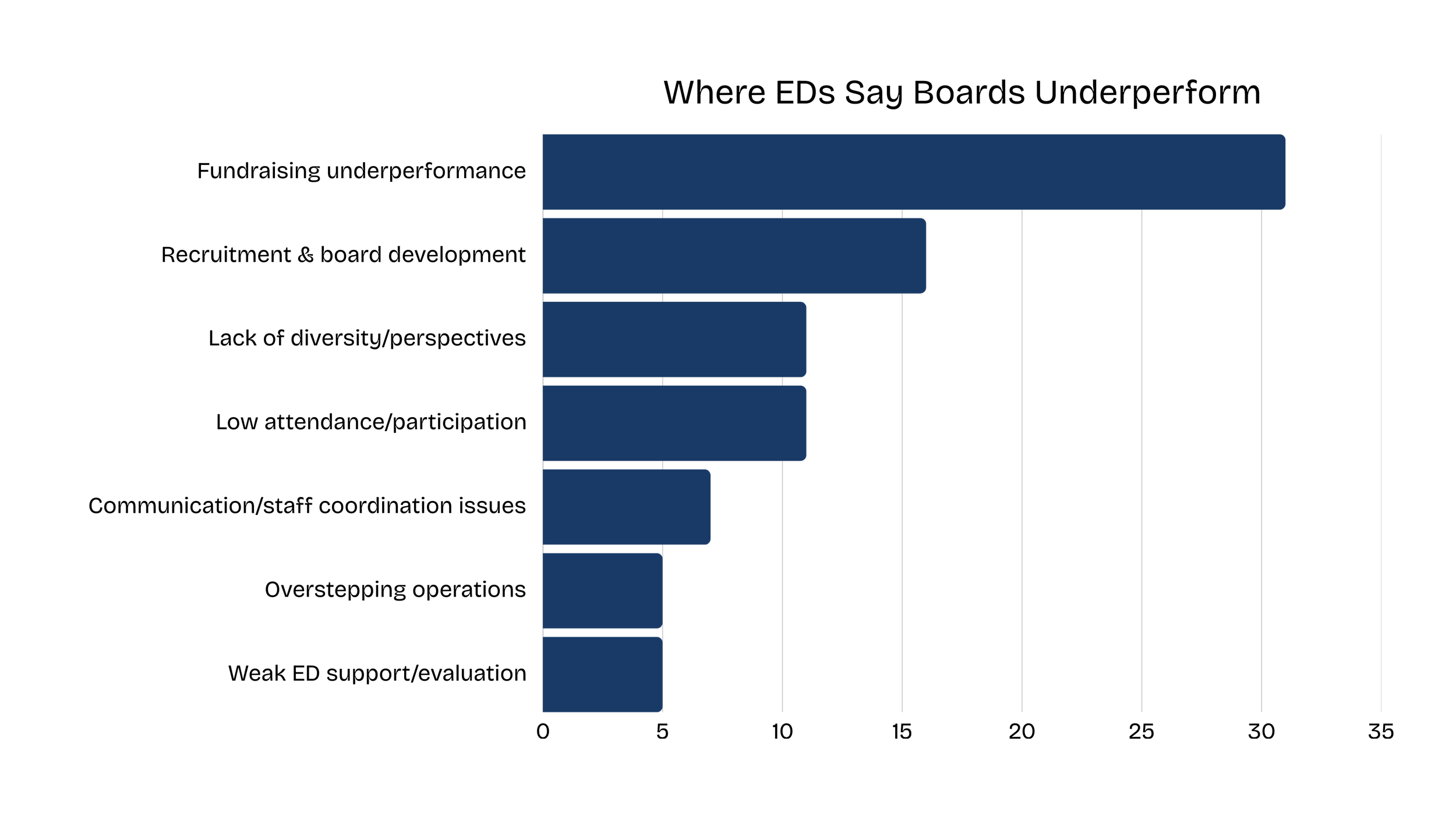
Executive directors most frequently identify fundraising and board recruitment as areas where boards struggle. Issues related to engagement, diversity, and financial oversight also surface as common challenges.
Barriers to Strengthening the Board
Common barriers to board effectiveness include limited capacity, unclear expectations, difficulty recruiting new members, and gaps in fundraising skills. These challenges often reinforce one another rather than occurring in isolation.
Board Structure
Board Management Takes Time
Boards are rated as more effective when executive directors spend more time each week on board-related work. Notably, no respondents who spent seven or more hours per week rated their boards as low-performing.
What Leaders Recommend
In Conclusion
Executive directors overwhelmingly value their boards, but many struggle with how to make them fully effective. Our findings show that boards tend to function best when leaders have the capacity to engage them intentionally—through preparation, communication, and follow-through. Strengthening boards, then, is less about asking people to do more and more about equipping organizations with the time, tools, and structures that make meaningful collaboration possible.
Purpose Possible will continue to dig into this data - be on the lookout for more resources in 2026!